
Rebellion Marketing
8 min read
6th Jun 2023
In the ever-evolving landscape, two prominent ad platforms stand out: Facebook Ads vs Google Ads. These advertising giants offer powerful tools to reach your target audience and promote your business effectively. But which platform is the right choice for your business? It’s a common question that many businesses face when deciding where to allocate their advertising budget.
Both Facebook and Google offer powerful advertising platforms with unique features and advantages. Let’s explore the key differences between Facebook and Google ads and help you determine what your business should use.
By understanding the strengths and targeting capabilities of each platform, you’ll be better equipped to make an informed decision that maximizes your advertising return on ad spend (ROAS).
Understanding Facebook Ads
Facebook Ads has emerged as a powerful advertising platform that offers businesses a multitude of opportunities to reach their target audience. With its vast user base of over 2.8 billion monthly active users, Facebook provides a huge reach for businesses.
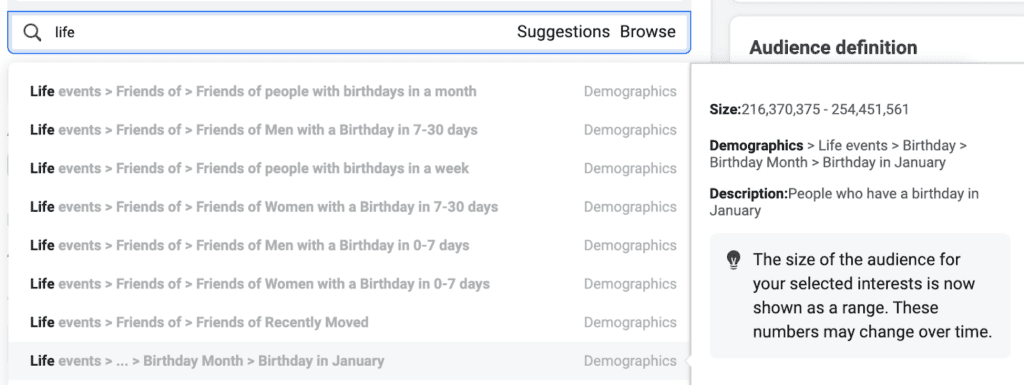
- Targeting Options: Businesses can leverage Facebook’s targeting capabilities to hone in on their audience based on demographics, interests, behaviours, and even specific criteria such as job titles or life events. This level of precision allows businesses to deliver their ads directly to the most relevant and engaged audience.
- Variety of ad formats to suit different marketing objectives. Whether it’s captivating image ads, engaging video ads, interactive carousel ads, or immersive collection ads. Businesses have the flexibility to choose the format that best showcases their products or services. Enabling firms to experiment with different creative approaches and find the most effective ad format for their target audience.
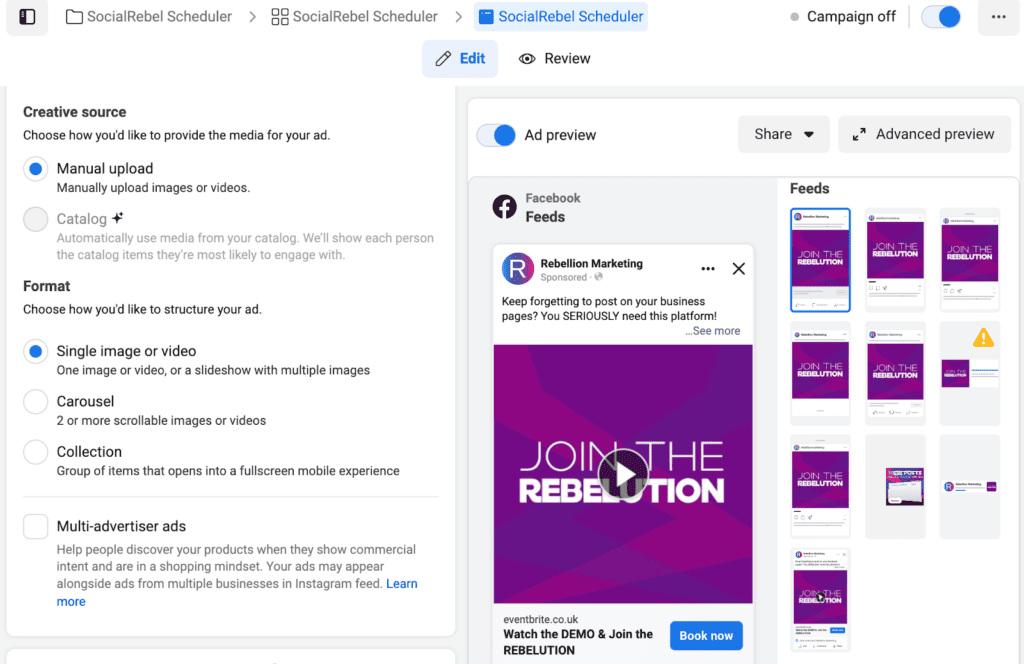
- With its expansive reach, precise targeting capabilities, and diverse ad formats. Facebook Ads has become a great tool for businesses looking to reach their audience effectively and achieve their marketing goals. Whether your objective is to boost brand awareness, drive website traffic, or generate leads. Facebook Ads offers the potential to unlock new opportunities and drive meaningful results for your business.
At Rebellion, we find it’s a great to way target and communicate Independent School Open Days, Membership sign-ups, spread brand awareness and promote our very own Social Rebel Scheduler.
Exploring Google Ads
When it comes to search engine advertising, Google Ads is undoubtedly the go-to platform for businesses looking to connect with users who are actively searching for their products or services. With Google being the most widely used search engine worldwide, Google Adwords provides optimal reach to all businesses.
- One of the key advantages of Google Ads is its powerful keyword-targeting capabilities. Businesses can bid on relevant keywords related to their offerings, ensuring that their ads appear when users search for specific terms. Like when you want to get to the top of Google, for example!
- Google Ads offers a variety of ad formats to cater to different advertising goals. For example, businesses can utilise:
- Search ads appear at the top of Google’s search results, targeting users who are actively looking for information or solutions.
- Display ads allow businesses to showcase their offerings across the Google Display Network, reaching a broader audience and increasing brand visibility.
- Shopping ads enable e-commerce businesses to promote their products with visually appealing images, prices, and other essential details.
- Video ads provide an opportunity to engage users through compelling visual content on platforms such as YouTube.
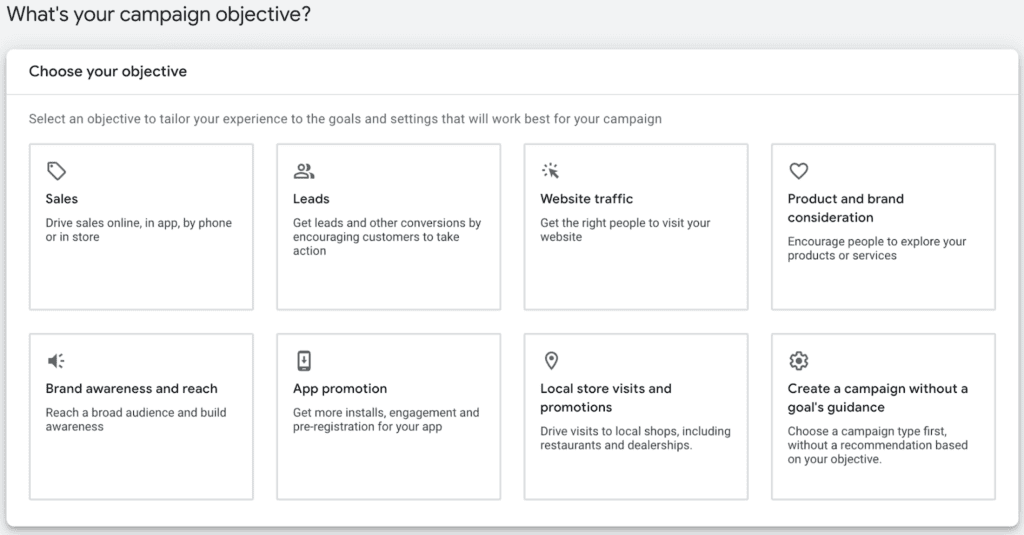
- With its expansive reach, precise keyword targeting, and diverse ad formats, Google Ads empowers businesses to connect with their target audience effectively. Whether your objective is to increase brand visibility, drive website traffic, or boost conversions. Google Ads provides a versatile platform to reach users in the moments that matter most. By strategically leveraging the power of Google Ads, businesses can enhance their online presence and capture qualified leads.
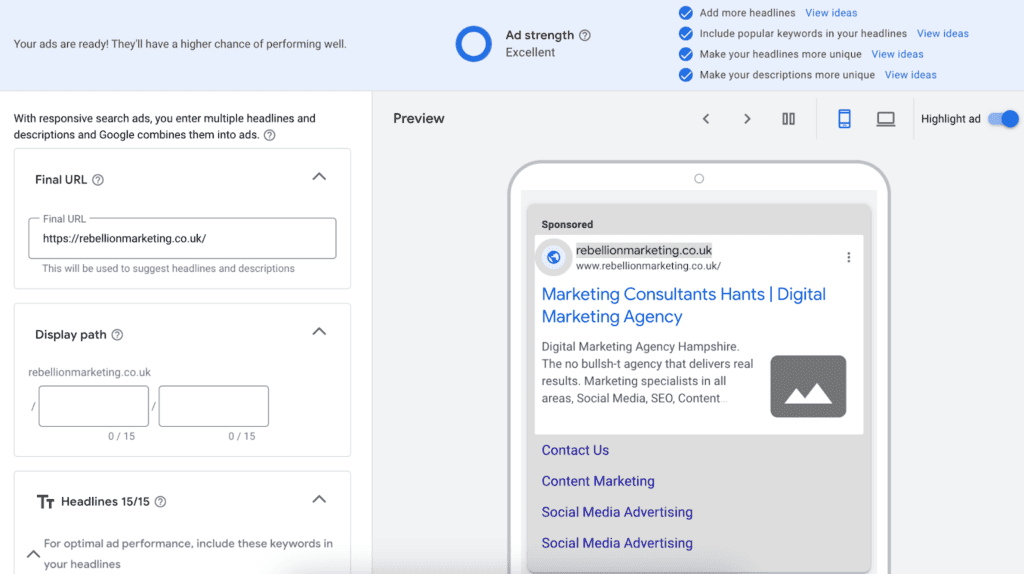
At Rebellion, we find it’s a great to way target and communicate business-to-business services. From debt recovery, drone surveys and even pest control. There are always potential customers searching for your exact business services on Google.
Facebook Ads vs Google Ads, who comes up trumps?
When it comes to choosing between Facebook Ads vs Google Ads, businesses need to assess their strengths and weaknesses.
Facebook Ads has its own set of advantages that make it a powerful advertising platform.
- Audience-targeting capabilities target specific demographics, interests, and behaviours.
- Variety of ad formats, including image, video, carousel, and more. Allowing businesses to experiment and find the format that works best for their target audience.
On the other hand, Google Ads excels in capturing high-intent search traffic.
- Opportunity to appear at the top of relevant search results, ensuring their ads are visible to users who are highly likely to convert.
- Google Ads offers a range of campaign types, including search ads, display ads, shopping ads, and video ads. Providing businesses with the flexibility to choose the format that best aligns with their campaign objectives.
While Facebook Ads and Google Ads have their respective strengths, it’s essential to consider other factors as well.
- Cost can play a significant role, as the cost-per-click and overall advertising costs may vary between the platforms. Businesses should evaluate their budget and expected return on investment when making a decision.
- Additionally, campaign objectives should be taken into account. If the goal is to raise brand awareness and engage with a specific audience, Facebook Ads might be the better option. Whereas, if the focus is on capturing high-intent search traffic and driving direct conversions, Google Ads might be more suitable.
Ultimately, businesses should carefully assess their goals, target audience, and advertising budget. Knowing these goals and targets can help you determine what platform your business should be using.
How To Choose the Right Platform for Your Business
When it comes to choosing the right advertising platform for your business, it’s crucial to approach the decision-making process strategically. Here are some practical guidelines to help you make an informed choice based on your goals, target audience, and available resources.
- Understand Your Target Audience: Begin by gaining a deep understanding of your target audience’s demographics, interests, and online behaviour. Consider which platform aligns better with your audience’s preferences and habits. Are they more active on Facebook, or do they rely heavily on search engines like Google for information?
- Define Your Campaign Objectives: Clearly outline your campaign objectives. Are you looking to build brand awareness, increase website traffic, drive conversions, or all of the above? Different platforms may excel in achieving different goals, so align your objectives with the platform’s strengths.
- Consider Your Budget and Resources: Assess your advertising budget and available resources. Facebook Ads and Google Ads may differ in terms of cost structures and pricing models. Determine which platform offers the most cost-effective solution for your business while maximizing your return on investment.
- Test and Analyse Performance: To make an informed decision, consider testing both platforms with smaller budgets initially. This allows you to gather data and analyze performance metrics. Such as click-through rates, conversion rates, and return on ad spend. Use this data to evaluate which platform delivers better results for your specific objectives.
- Leverage A/B Testing: Experiment with different ad formats, targeting options, and messaging on each platform. Conduct A/B testing to compare the performance of your campaigns. This can identify which platform generates higher engagement, better click-through rates, and improved conversion rates. This data-driven approach will guide you in making the right choice.
- Monitor and Optimize: Continuously monitor the performance of your campaigns on the chosen platform. Make adjustments based on the insights gained from analytics data. Optimize your ads, targeting, and messaging to maximize the effectiveness of your campaigns and improve overall results.
To summarise, sorry but there isn’t a one-size-fits-all answer to the Facebook Ads vs Google Ads debate. As with everything in marketing, it really depends. It’s why we bang on so much about the importance of strategy and understanding your target market.
Facebook Ads and Google Ads can play valuable roles in a comprehensive digital advertising strategy. Just remember, to optimise regularly, and test your campaigns to ensure you’re maximising the effectiveness of your chosen platform.
Facebook Ads vs Google Ads, Help!
Still confused? No problem, that’s exactly where we come in. As part of our Pay Per Click management services, we offer strategy, advice, and full management of Google and Facebook ads.
Get in touch with us if your Facebook Ads vs Google Ads headaches are getting too much, we can help. Book a consultation call with us and discover how we can help you get the most out of your budget.
Don’t forget, you can keep up to date with our recent news and insights on our LinkedIn page.
Latest news

8 min read
30th Sep 2026
Beyond the Prospectus: Storytelling That Attracts the Right Families
Choosing a school is rarely about one thing. Facilities certainly matter, and parents will want to know about classrooms, sports pitches, theatres, boarding houses and laboratories. An impressive campus can help create confidence, but buildings alone rarely explain why one school feels right and another does not. Families are trying...
Rebellion Marketing
Read article

8 min read
21st Sep 2026
AI Search Optimisation: A Practical Guide (Minus the Mystical Nonsense)
AI search has moved the front door to your website, and nobody sent a change of address card! Someone asks ChatGPT which consultancy to shortlist, or types a question into Google and gets an AI-generated answer with three cited sources. Your brand is either in that answer or it isn’t....

Jade Arnell
Read article

8 min read
17th Sep 2026
Thought Leadership Without the Waffle: A No-Nonsense Guide for Firms
Few marketing phrases manage to sound as important and say as little as “thought leadership”. Professional services firms are routinely told they need more of it. Partners should become thought leaders. The website needs thought leadership content. LinkedIn needs a thought leadership strategy. Before long, somebody is suggesting a quarterly...
Rebellion Marketing
Read article

8 min read
9th Sep 2026
How AI Decides Which Schools to Recommend to Parents
A parent looking for a school used to begin with a fairly predictable Google search. They might type “independent schools near Oxford”, open several websites and gradually build a shortlist. Increasingly, there is another option. They can ask an AI system a much more specific question. “Which independent girls’ schools...
Rebellion Marketing
Read article